Niacinamide + Tranexamic Acid — The Dark Spot Combo Nobody Talks About

Everyone recommends vitamin C for dark spots. And vitamin C is great — when it doesn't oxidize in the bottle, sting your face, or conflict with half your other actives. What if there was a more stable, less irritating combo that works just as well?
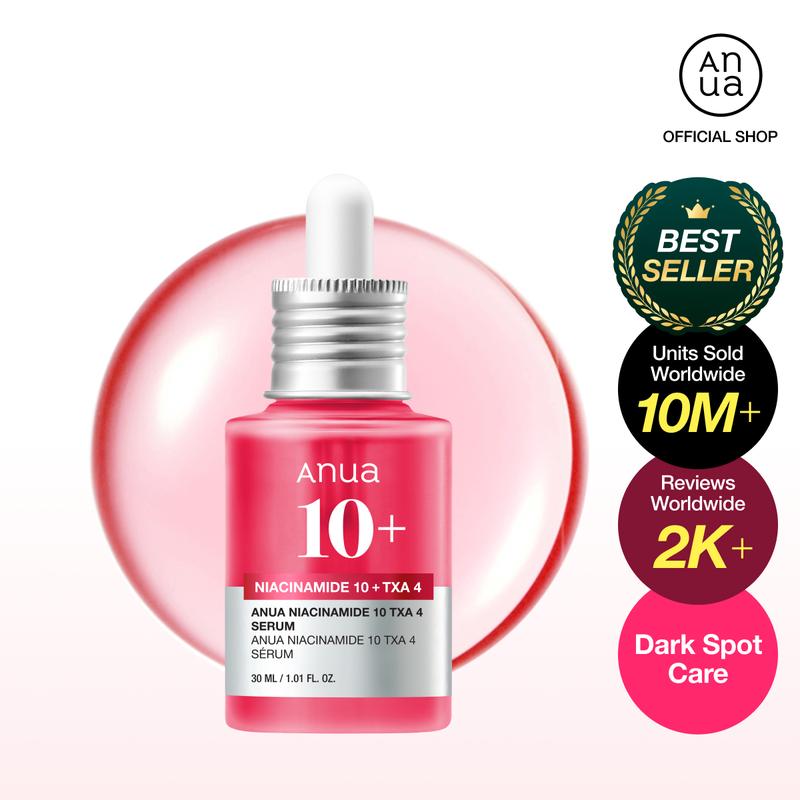
That's exactly what Anua built with their Niacinamide 10% + TXA 4% Dark Spot Correcting Serum. And after 60 days of testing it on stubborn post-acne marks, I'm convinced this is the hyperpigmentation treatment most people should be using instead of vitamin C.
Why This Formula Works Differently
Most brightening serums rely on a single active. Anua stacked four proven pigment-inhibitors at meaningful concentrations — not trace amounts buried at the bottom of the ingredient list.
| Active | Concentration | Mechanism |
|---|---|---|
| Niacinamide | 10% | Blocks melanin transfer to skin cells, reduces inflammation |
| Tranexamic Acid | 4% | Interrupts the UV-triggered pigmentation pathway at the source |
| Arbutin | 2% | Inhibits tyrosinase — the enzyme that produces melanin |
| 3-O-Ethyl Ascorbic Acid | Undisclosed | Stable vitamin C derivative — antioxidant + brightening |
What makes this smart is that each ingredient attacks pigmentation through a different mechanism. Niacinamide blocks melanin delivery. Tranexamic acid prevents the signal that triggers melanin production. Arbutin inhibits the enzyme itself. And the vitamin C derivative provides antioxidant protection on top. It's a multi-pronged approach that clinical studies have shown works better than any single ingredient alone.
The Science Behind Tranexamic Acid
Tranexamic acid is the real star here, and it's wildly underrated in Western skincare. Originally used as an oral medication to reduce heavy bleeding, dermatologists discovered it has powerful effects on pigmentation when applied topically. Published studies have shown it's effective for melasma — one of the most stubborn forms of hyperpigmentation — at concentrations as low as 2-3%. Anua uses 4%.
Unlike vitamin C, tranexamic acid is stable at room temperature, doesn't oxidize in the bottle, plays well with retinol and AHAs, and rarely causes irritation. It's been a staple in Korean and Japanese dermatology for years, and it's just now gaining traction in the US.
60-Day Results
The Rating
How to Use It
- Apply to clean, toned skin. After your cleanser and toner, while skin is still slightly damp.
- Use 3-4 drops. Apply directly to dark spots first, then spread remaining product across the full face.
- Pat in gently. Don't rub — pressing helps absorption without spreading the product too thin on target areas.
- Use AM and PM. Consistent twice-daily use is what gets results. Always follow with SPF 30+ in the morning — sun exposure without SPF will undo everything this serum does.
- Layer with retinol at night. Niacinamide + retinol is a power combo. Apply this serum first, let it absorb, then follow with your retinol.
Best for: Anyone dealing with post-acne marks, sun spots, melasma, or uneven skin tone. All skin types — including sensitive skin that can't tolerate vitamin C serums. Works especially well for darker skin tones where vitamin C can sometimes cause irritation.
Skip if: You're looking for immediate results — this is a cumulative treatment that needs 4-8 weeks of consistent use. If you need faster fading, consider pairing with professional treatments and using this for maintenance.
The Verdict
Anua's Dark Spot Correcting Serum is my new go-to recommendation for hyperpigmentation over vitamin C serums. It's more stable, less irritating, and the multi-active approach genuinely works faster. At under $25, it's one of the best value-for-science ratios in K-beauty right now.
Ready to try it?
Shop Anua Niacinamide 10% + TXA 4% Dark Spot Correcting Serum
Disclosure: This page contains affiliate links. If you purchase through these links, I may earn a small commission at no extra cost to you. I only recommend products I personally use and love.